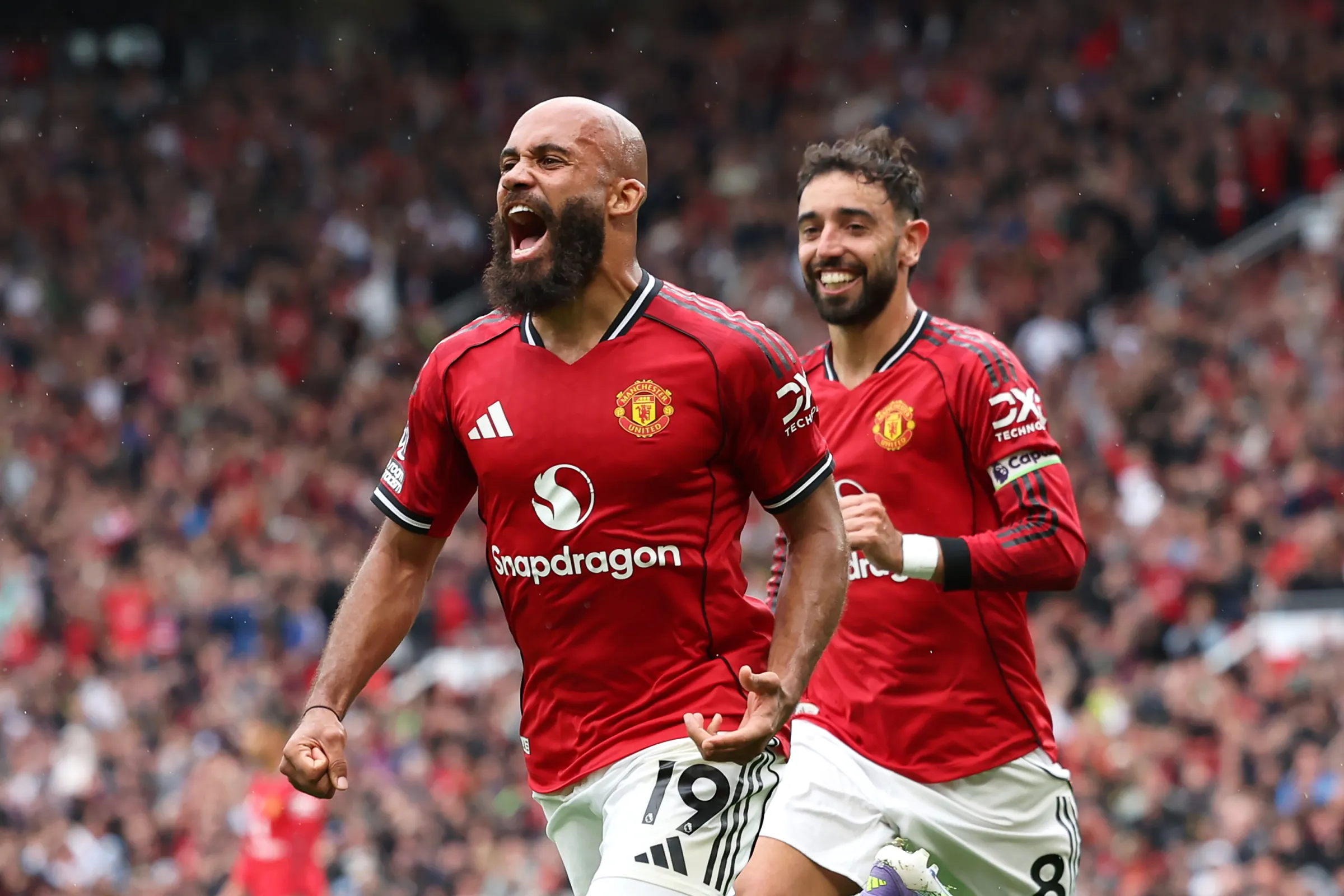
The Manchester United F.C. vs Burnley F.C. timeline is closely monitored by fans of both football clubs.
The rivalry between Manchester United F.C. and Burnley F.C. is one of English football’s more traditional matchups, steeped in over a century of competition.
While it has rarely been classed among the nation’s fiercest rivalries, the encounters between the two clubs have offered some unforgettable moments, shaped by contrasting fortunes, regional pride, and the evolution of English football itself.
This is a detailed timeline of the Manchester United vs Burnley fixture — from its origins in the early 20th century to its most recent Premier League clashes.
Early Manchester United F.C. vs Burnley F.C. Timeline: 1902–1930
The first recorded meeting between Manchester United and Burnley came in 1902, shortly after United’s formation under their new name (the club had previously been known as Newton Heath).
In those early years, both clubs oscillated between the First and Second Divisions, and their meetings were often gritty affairs marked by physical play rather than finesse.
Burnley, known as the “Clarets” for their distinctive maroon shirts, were an established Lancashire club, while Manchester United were still developing their identity.
By the 1910s, United had already begun to emerge as a top-tier force, but Burnley were not far behind — and in 1920–21, Burnley won their first-ever First Division title, while United struggled in mid-table obscurity.
The fixture at this stage reflected a Lancashire derby spirit: two northern clubs separated by just over 30 miles, each fighting for local bragging rights.
Post-War Period: 1940s–1960s
After World War II, Burnley enjoyed one of their most successful periods in club history.
The team, managed by Harry Potts, became a symbol of small-town excellence in English football, while Manchester United, under Matt Busby, were building toward something greater.
In the 1950s, United’s “Busby Babes” clashed with Burnley’s disciplined, hard-working side multiple times.
Matches between the clubs were often thrilling and close, with both sides competing for top positions in the First Division.
One notable encounter came in 1956, when Burnley held United to a draw, disrupting their title chase.
However, United soon rose to dominance, claiming league titles in 1956 and 1957 before tragedy struck in 1958 with the Munich Air Disaster.
The fixture in the aftermath carried added emotional weight, as Burnley — like many clubs at the time — paid tribute to the victims and survivors of United’s loss.
By 1960, Burnley achieved their second and most recent top-flight title, a triumph built on tactical discipline and youth development, ironically echoing Busby’s vision at United.
When the two met that season, they were among England’s elite — a rare period where both clubs were genuine contenders for domestic honors.
Decline and Divergence: 1970s–1990s
The 1970s marked a sharp divergence in the clubs’ trajectories.
Manchester United, despite relegation in 1974, quickly bounced back and began to reassert themselves as one of England’s biggest sides.
Burnley, however, entered a long decline that saw them drop down the divisions, even reaching the Fourth Division in the 1980s.
This meant that fixtures between the two became rare, limited to occasional cup meetings.
A memorable FA Cup tie took place in 1983, when Burnley — then struggling outside the top flight — faced a United side led by Ron Atkinson.
United triumphed comfortably, showcasing the gulf that had opened between the clubs.
Through the late 1980s and 1990s, as Sir Alex Ferguson built one of the most successful dynasties in football history, Burnley were focused on survival rather than silverware.
For nearly 30 years, they did not meet in league competition.
The Premier League Era: 2000s Revival
Burnley’s long-awaited return to the top flight came in 2009–10, under manager Owen Coyle, marking the club’s first top-division campaign in 33 years.
Their early-season clash with Manchester United at Turf Moor proved unforgettable.
In August 2009, Burnley stunned the defending champions 1–0 thanks to a spectacular volley from Robbie Blake — a goal that instantly became one of the Premier League’s iconic upsets.
The atmosphere that night encapsulated everything Burnley stood for: passion, grit, and a defiant belief against bigger opponents.
Although Burnley were relegated at the end of that season, the fixture had regained significance.
United continued to dominate English football through the early 2010s, while Burnley bounced between divisions, developing under Sean Dyche, whose pragmatic approach turned the Clarets into one of the most resilient teams in the Premier League.
Renewed Rivalry: 2010s–2020s
Burnley’s promotion in 2014 marked the start of a new chapter in the rivalry.
Under Dyche, Burnley became known for defensive organization and physicality, often frustrating United sides led by a succession of post-Ferguson managers.
In 2015, Burnley held United to a 0–0 draw at Turf Moor, a result that typified their stubbornness.
In December 2017, Burnley stunned Old Trafford again by racing to a 2–0 halftime lead through Ashley Barnes and Steven Defour before Jesse Lingard’s brace salvaged a 2–2 draw for United.
Then, in January 2020, Burnley achieved something even more remarkable — a 2–0 victory at Old Trafford, their first there since 1962.
Goals from Chris Wood and Jay Rodriguez sealed the win, sparking jubilation among Burnley supporters and highlighting United’s ongoing struggles under Ole Gunnar Solskjær.
The fixture had come full circle — no longer a one-sided contest, but a competitive battle between a global giant and one of England’s proudest smaller clubs.
Recent Meetings and Modern Context
As of the 2024–25 season, both clubs have undergone significant change.
Manchester United, managed by Erik ten Hag, are attempting to rebuild their dominance and identity amid ownership restructuring and on-field inconsistency.
Burnley, meanwhile, returned to the Premier League in 2023 under Vincent Kompany, adopting a far more possession-based, modern style compared to the Dyche years.
Their most recent clashes have showcased this evolution.
United’s superior firepower — led by the likes of Bruno Fernandes and Marcus Rashford — has often proved decisive, but Burnley continue to approach each encounter with ambition rather than fear.
Matches between the two now reflect not just a clash of clubs, but of philosophies: tradition versus transformation, industry versus innovation.
Legacy of the Manchester United F.C. vs Burnley F.C. Timeline
The Manchester United vs Burnley rivalry endures as a reflection of English football’s depth and diversity.
From the smoky terraces of early 20th-century Lancashire to the bright lights of the Premier League era, the fixture has spanned every chapter of the game’s evolution.
It has produced moments of heartbreak, shock victories, and mutual respect — with both clubs representing distinct yet complementary aspects of the English football story.
While United’s global stature and Burnley’s community-driven resilience may seem worlds apart, every meeting serves as a reminder that history, pride, and persistence remain the heart of the sport.
As the next chapter unfolds, the timeline of Manchester United vs Burnley continues to grow — rooted in over 120 years of footballing tradition.