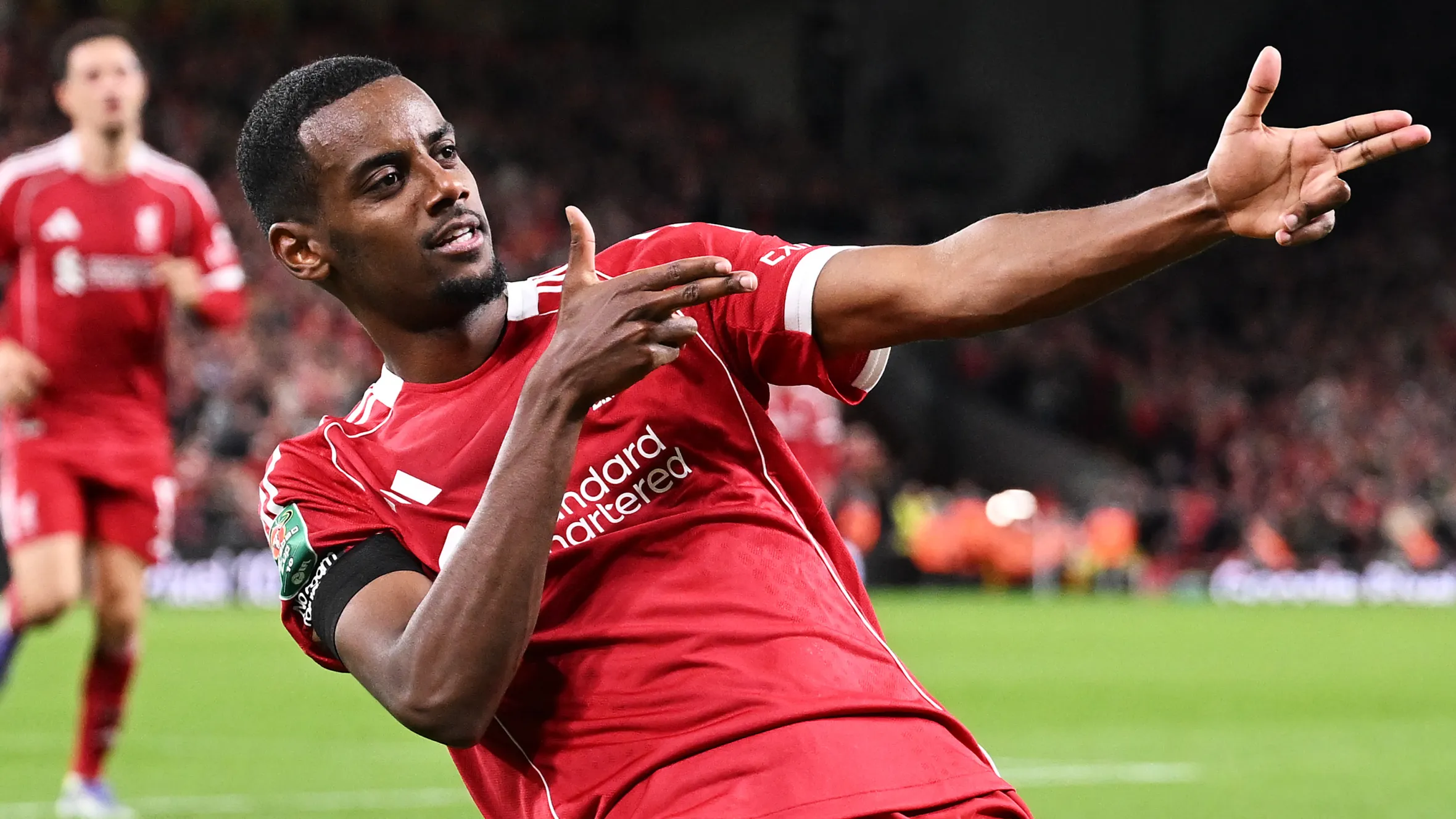
Alexander Isak rejoined Liverpool’s first-team training squad at the AXA Training Centre on Thursday morning, returning to group sessions for the first time since December after suffering a fractured fibula and ankle injury that required surgery. The timing of his comeback, with Liverpool facing Manchester City in the FA Cup quarter-final at the Etihad Stadium on Saturday and a Champions League last-eight tie against Paris Saint-Germain on the horizon, could hardly be more significant.
Isak sustained the injury on December 20 during a 2-1 win over Tottenham, when he was caught by a challenge from Micky van de Ven at the precise moment he was converting a Liverpool goal. He had the kind of bad luck that felt particularly cruel given the circumstances: scoring for his new club while simultaneously breaking his leg. The £125 million summer signing from Newcastle had managed just 16 appearances and three goals for Liverpool before the accident derailed what looked like a promising first season at Anfield.
Manager Arne Slot confirmed the return on Wednesday and struck a carefully measured tone. “To have him again in a team that’s usually generating quite a lot of chances, and maybe not immediately from the first moment that he can start, but to have him back for the last two months is, I think, very helpful for us,” Slot said.
The distinction between returning to training and being available to play is an important one. A player coming back from a fibula fracture and ankle surgery after more than three months out will need to rebuild match fitness gradually, and rushing him back risks a setback that could compromise his World Cup participation with Sweden in the summer.
There was a double boost in Thursday’s session. Jeremie Frimpong, who was withdrawn after just 13 minutes during the Netherlands’ midweek international on Tuesday due to a knee scare, also returned to training after scans showed no structural damage. Frimpong’s availability for Saturday would be a significant relief to Slot, who has dealt with a frustrating run of injuries throughout the season that has prevented the full-strength squad from ever truly clicking for a sustained period.
Sweden’s qualification for the 2026 World Cup, secured through a playoff win over Poland on Tuesday, adds another layer of context to Isak’s return. The striker is one of the most important players in the Swedish national setup, and the prospect of the World Cup later this year will be driving him through every hour of his rehabilitation. Slot acknowledged the added motivation, noting that Isak was in “a really good place” given both the personal and professional timing of his return.
Liverpool’s season has been a significant step down from their title-winning campaign of 2024-25 under Slot’s first year in charge. A disappointing Premier League campaign, punctuated by Salah’s public disagreements with the manager and a host of injuries, has left them fighting for a top-four finish rather than the title.
The FA Cup and Champions League represent the most realistic remaining routes to silverware. Getting Isak back into the squad, even from the bench initially, changes Liverpool’s attacking threat and provides a focal point that Hugo Ekitike, impressive as he has been, cannot quite replicate on his own. Saturday’s quarter-final against a Manchester City side who are themselves navigating a difficult season will be a significant early test of whether Liverpool can still compete for the trophies that matter.