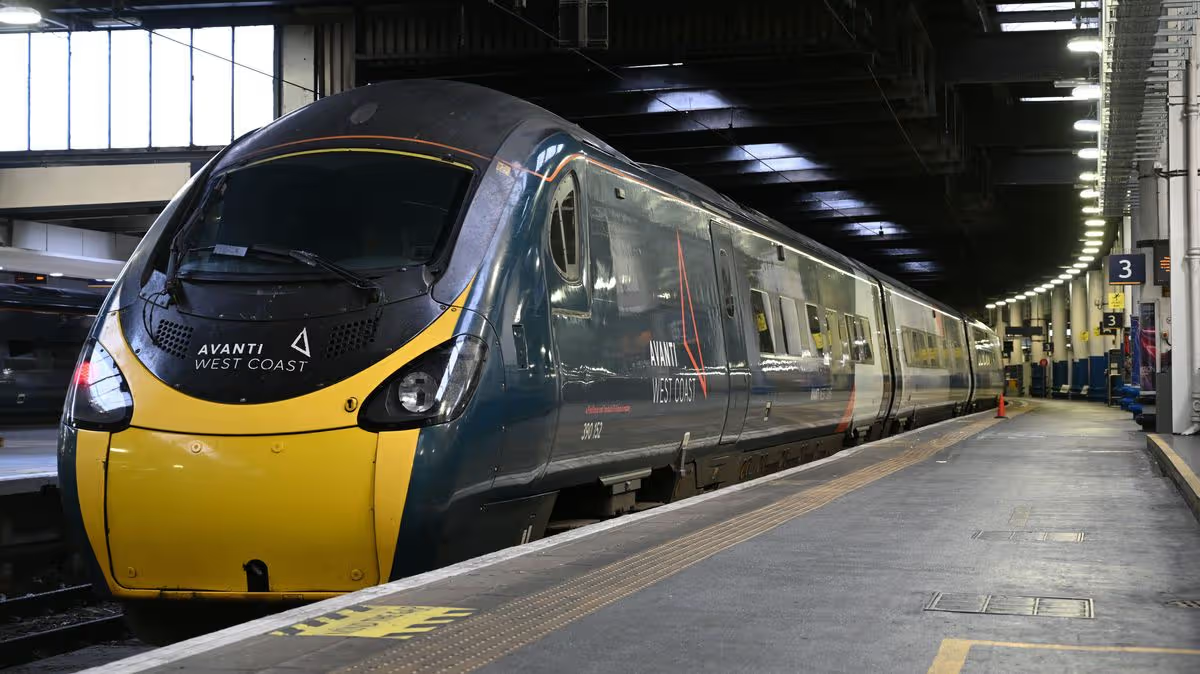
London Euston station reopens to mainline services on Thursday, April 9, after a six-day engineering shutdown that represented one of the most operationally complex Easter travel disruptions in England’s recent rail history.
For the 100,000 passengers who use Euston on a typical working day, the closure between Good Friday and Wednesday covered a window that compressed demand, redirected traffic and tested every alternative corridor the capital’s rail network offers — often beyond comfortable capacity.
The closure was part of a £400 million investment programme by Network Rail targeting the West Coast Main Line between London and Milton Keynes, the busiest mixed-use railway in Europe. Works included £8.4 million in track upgrades at Willesden, £7 million in signalling improvements at Leighton Buzzard, overhead line equipment replacement at Wembley and platform and canopy upgrades at Harrow and Wealdstone station.
Network Rail framed the shutdown as a deliberate strategy to compress months of maintenance into a single concentrated window, accepting short-term disruption for long-term reliability gains.
The immediate consequences for passengers were significant. Avanti West Coast cancelled all services south of Milton Keynes Central, replacing them with rail replacement buses for routes connecting London to Birmingham, Manchester, Liverpool and Glasgow.
A journey that typically takes 90 minutes between London and Birmingham extended to well over three hours once bus transfers and changed platform arrangements were factored in. Chiltern Railways, operating as the sole direct rail link between London and Birmingham via Marylebone, implemented formal queuing systems to manage demand that arrived in volumes the station was not designed to handle routinely.
London St Pancras and King’s Cross absorbed much of the overflow, with TravelWatch formally identifying both as high-pressure nodes during the peak Easter weekend. Six simultaneous London Underground line closures or partial suspensions — affecting the Lioness and Bakerloo lines among others — compounded the pressure, creating a cascading effect that extended well beyond the Euston closure itself. Heathrow access via the Elizabeth line was also disrupted, adding complexity for travellers attempting to connect to international flights during what is consistently one of the UK’s busiest travel periods.
The commercial knock-on effects extended into Euston’s own retail and hospitality environment, where reduced footfall over six days translates directly into lost revenue for concession operators.
Network Rail used the quiet period to install a new Customer Service Hub on the concourse and upgrade digital departure boards — improvements that will benefit the station’s functionality when it returns to full operation Thursday morning. Whether the travelling public will notice these upgrades quickly, or remember primarily the disruption, is the question Euston’s management will be answering in the weeks ahead.